
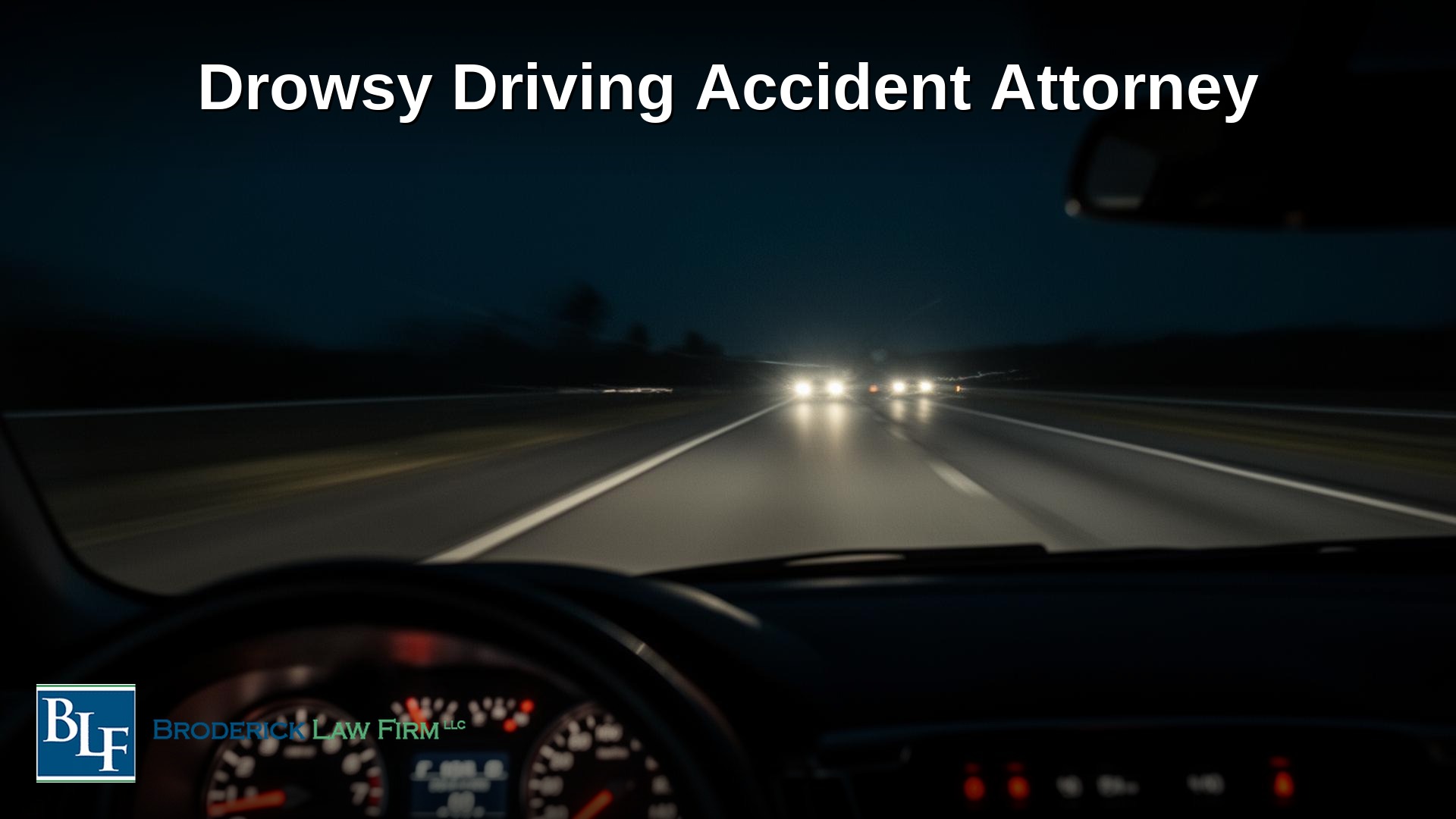
Nearly all of us know from experience that driving while overtired can be dangerous. Unfortunately, most people have experienced those moments of feeling your eyes start to close involuntarily or even momentarily fallen asleep at the wheel. 4.2% of respondents to one CDC survey reported that they had fallen asleep at the wheel at least once in the previous 30 days.
But a driver doesn’t have to actually fall asleep to present a danger on the road. Research has shown that reduced sleep has a similar effect to being under the influence of alcohol. Fatigue reduces attentiveness and slows reaction times. And you might be surprised how much sleep a driver needs to avoid these issues.
If you’ve been injured in a car accident caused by a sleepy driver, or that you believe was the other driver’s fault for any reason, you should speak with an experienced local motor vehicle accident attorney as soon as possible. As time passes, evidence may be lost and witness memories may fade. The Broderick Law Firm makes it easy to get the information you need by offering free, no-obligation consultations. You can schedule yours right now by calling 978-459-3085 or filling out our contact form.
Some states have begun to legislate against drowsy driving. Currently, neither Massachusetts nor New Hampshire has a specific law prohibiting driving after too little sleep or while feeling fatigued. However, that doesn’t mean a drowsy driver who causes an accident is in the clear. Drivers in both New Hampshire and Massachusetts are generally responsible for accidents they cause through negligence. And driving when you are too tired to operate the vehicle safely is negligent.
When you hear “sleep deprivation,” you probably think of someone who has been up all night. That definitely makes for dangerous driving, but the risks increase far sooner than you might think. For example, a person who slept at least six hours but less than seven the night before has a crash risk 30% higher than a driver who got a full night’s sleep. Another study determined that a person who had been up for 21 consecutive hours experienced impairment similar to those associated with a .08 blood alcohol level.
Many people have go-to tricks for when they’re feeling sleepy on the road, like opening the car windows to let in a blast of cold air or cranking up music. But research has shown those techniques don’t actually help. Even if you prevent yourself from actually falling asleep, you don’t regain alertness or reaction time.
There’s no test for fatigue like there is for driving under the influence of alcohol. That may make it trickier to establish that the driver who hit you was negligent due to drowsy driving. But that doesn’t necessarily mean you can’t prove your case.
First, there may be evidence that the driver was fatigued. For example, they may have admitted to falling asleep at the wheel, or police responding to the accident scene may have noted signs of impairment. Your drowsy driving accident attorney can also investigate and use the discovery process to learn things like how much sleep the driver had gotten the night before and how long they had been on the road. But you typically won’t actually have to prove that the driver was too tired to drive safely in order to establish your claim. That’s because the driver will nearly always have committed other acts of negligence due to their fatigue.
For example, a drowsy driver might drift across the center lane when their eyes are briefly closed, or may fail to react promptly when a vehicle enters an intersection or a pedestrian steps into the street. The reason drowsy driving is dangerous is because drivers who are fatigued drive less safely. And the unsafe driving itself typically constitutes negligence.
No attorney can tell you exactly how much you will receive in damages for your car accident. In fact, you should be very wary of a lawyer who makes specific dollar value promises. However, an experienced car accident lawyer can tell you what types of damages you may be entitled to, and how cases similar to yours have been resolved.
Some common types of damages include:
The best way to find out whether the other driver may be legally responsible for your injuries is to consult an experienced local car accident lawyer. Attorney Kevin Broderick has been fighting for victims of car accidents and other motor vehicles accidents in Massachusetts and New York for decades. Schedule your free consultation now. Call 978-459-3085.