
Injured at an AirBnB: Who’s Responsible?
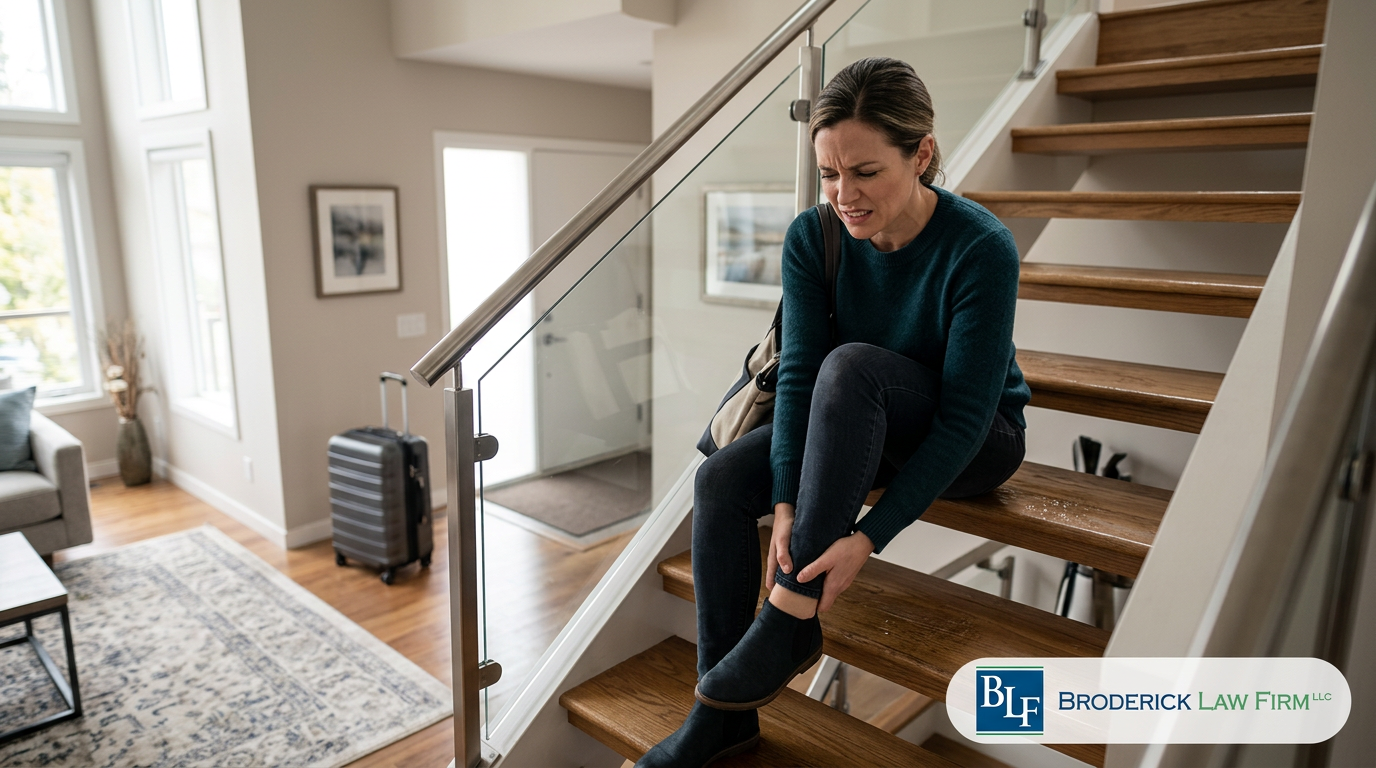
You probably know that if you’re injured because of dangerous conditions or careless maintenance at a hotel or resort, you may have a claim against the business. But what if you’re staying at an AirBnB, Vrbo, or other short-term rental?
Nobody wants to think about injuries, insurance or lawsuits on vacation. But if the property isn’t properly maintained and someone gets hurt, you’ll want to know what to do. Here’s what you need to know about liability for short-term rental injuries and how insurance coverage works.
Liability for Short-Term Rental Injuries
Once upon a time, AirBnB meant people renting out the guest cottage behind the house, an apartment over the garage, or even a portion of their home for short-term guests. While there’s still some of that, the concept has evolved a lot. Many AirBnB and other short-term rental locations are apartments and rental homes purchased specifically for the purpose of offering short-term rentals.
In most cases, that won’t matter for liability purposes. Renting space is a commercial transaction, regardless of whether it’s a couple renting out their pool house or an LLC with a dozen properties. So, short-term rental guests are typically considered invitees. That means their hosts are held to the highest duty of care under Massachusetts premises liability law. Property owners are required to maintain their premises in reasonably safe condition for invitees.
If the property owner fails to maintain the property in reasonably safe condition and an invitee is injured as a result, the owner will typically be liable.
Property Owners Aren’t Liable for Every Injury That Happens on Their Property
Note that although property owners have a significant duty of care to invitees, that doesn’t mean they’re automatically liable if someone is injured on their premises. For example, if an intoxicated guest trips and falls down the stairs on a normal, well-maintained, well-lit stairway, the owner likely won’t be liable. Similarly, if one guest spills soap on the floor and neglects to clean it up and then their spouse slips on the soap and is injured, the owner probably isn’t responsible.
On the other hand, if a guest trips because there’s no light on the stairs, or because the carpet is loose at the top of the stairs, or because the porch railing is loose, or due to any other defect or faulty maintenance, the property owner is likely liable.
Who Pays When an AirBnB or Short-Term Rental Owner is Liable?
Normally, when a person or business is liable for an injury, their own insurance carrier pays for the damages. If they don’t have insurance coverage or their insurance isn’t sufficient, they may have to pay some or all of the damages directly. With a short-term rental, it’s a little more complicated.
First, regular homeowners’ insurance typically won’t cover injuries to paying guests or damage to their property. Massachusetts law requires owners of short-term rentals to secure at least $1 million in liability insurance. That insurance typically covers injury to guests, damage to or theft of guests’ property, and liability to others due to the rental arrangement. When the host is renting the property directly rather than using a platform like AirBnB or Vrbo, they’re required to purchase that insurance themselves.
However, in some cases insurance coverage provided by the platform may satisfy the requirements under Massachusetts law, meaning that the owner can rely on the platform’s coverage rather than purchasing their own. But the state doesn’t review or sanction third-party coverage. It’s up to the property owner to ensure that the coverage offered is sufficient to satisfy the law. Each platform operates a bit differently.
AirBnB v. Vrbo Insurance
AirBnB and Vrbo are two of the largest short-term rental platforms. AirBnB offers $1 million in host liability coverage. The coverage is free and is automatic unless the property owner opts out. Vrbo also offers $1 million in host liability coverage, but with a qualification. Vrbo’s coverage is secondary if the host has their own coverage. And, if the host doesn’t have their own coverage, a 25% deductible applies. That means the uninsured host would be directly liable for 25% of the damages, which they may or may not have the resources to pay.
There are also many exclusions. For example, AirBnB’s insurance doesn’t cover (among other things) injuries associated with motor vehicles or watercraft, losses relating to Chinese drywall, exposure to mold or bacteria, or injuries related to insulation systems.
If this is starting to seem incredibly complicated, that’s because it can be. One of the first things an experienced Lowell premises liability attorney will do for you is investigate who may be liable, what insurance coverage is available, what the policy limits are and which insurance is primary.
The Sooner You Talk to a Premises Liability Lawyer, the Better
The last thing you need after your vacation is interrupted by an injury is to have to untangle a complex web of liability and insurance. When you hire an attorney right away, your premises liability lawyer can take over all communications with the insurance companies while you focus on your recovery.
To learn more about how an experienced Lowell personal injury lawyer can protect your right to compensation, call The Broderick Law Firm now by calling 978-459-3085 or fill out our contact form.